Home exchange app that makes finding and managing stays simple and intuitive.
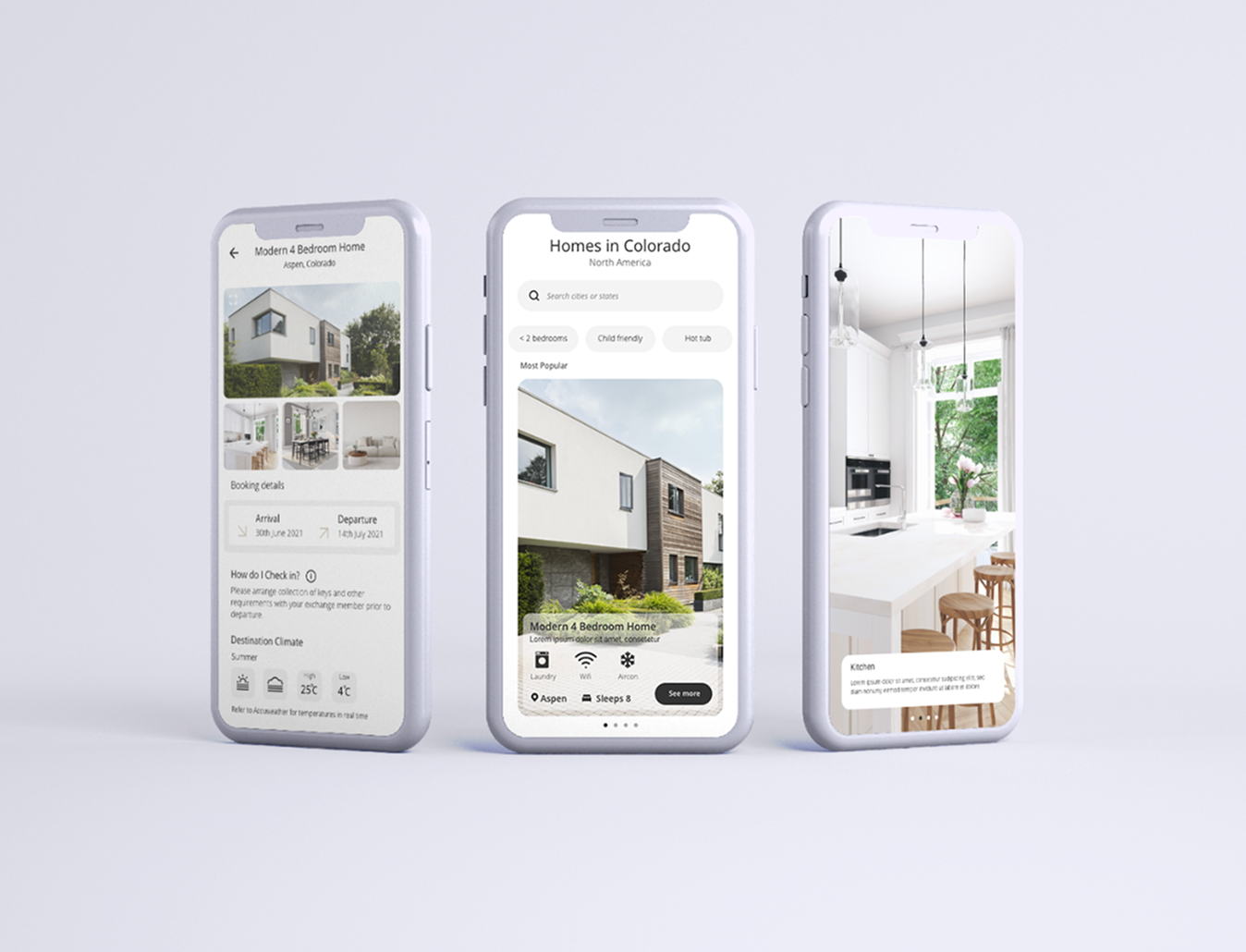
Design Thinking Process guides this project through Empathize, Define, Ideate, Prototype, and Test & Iterate to create user-centered solutions.
An Overview
Lorem Ipsum is simply dummy text of the printing and typesetting industry.
Lorem Ipsum is simply dummy text of the printing and typesetting industry.
Lorem Ipsum is simply dummy text of the printing and typesetting industry.
Lorem Ipsum is simply dummy text of the printing and typesetting industry.

Discover
Research began with the problem itself. I wrote a problem statement to anchor the work: Family homeowners in cities and suburbs need a low-cost vacation rental two to three times a year, with convenient access to outdoor activities and places of interest. From there, a set of "How might we…"questions framed the design challenges — among them: how might we help members find homes specific to their requirements; secure a swap and communicate efficiently; give a realistic sense of a home and its surroundings; and break complex tasks into palatable, mobile-sized chunks? A competitive analysis confirmed the core insight: with no differentiation and no apps in the market, the deciding factors for users would come down to listing quality, usability, security of their property, and response rate to enquiries. Offline usability, in particular, would be central to the app's value while travelling abroad.
Ideate
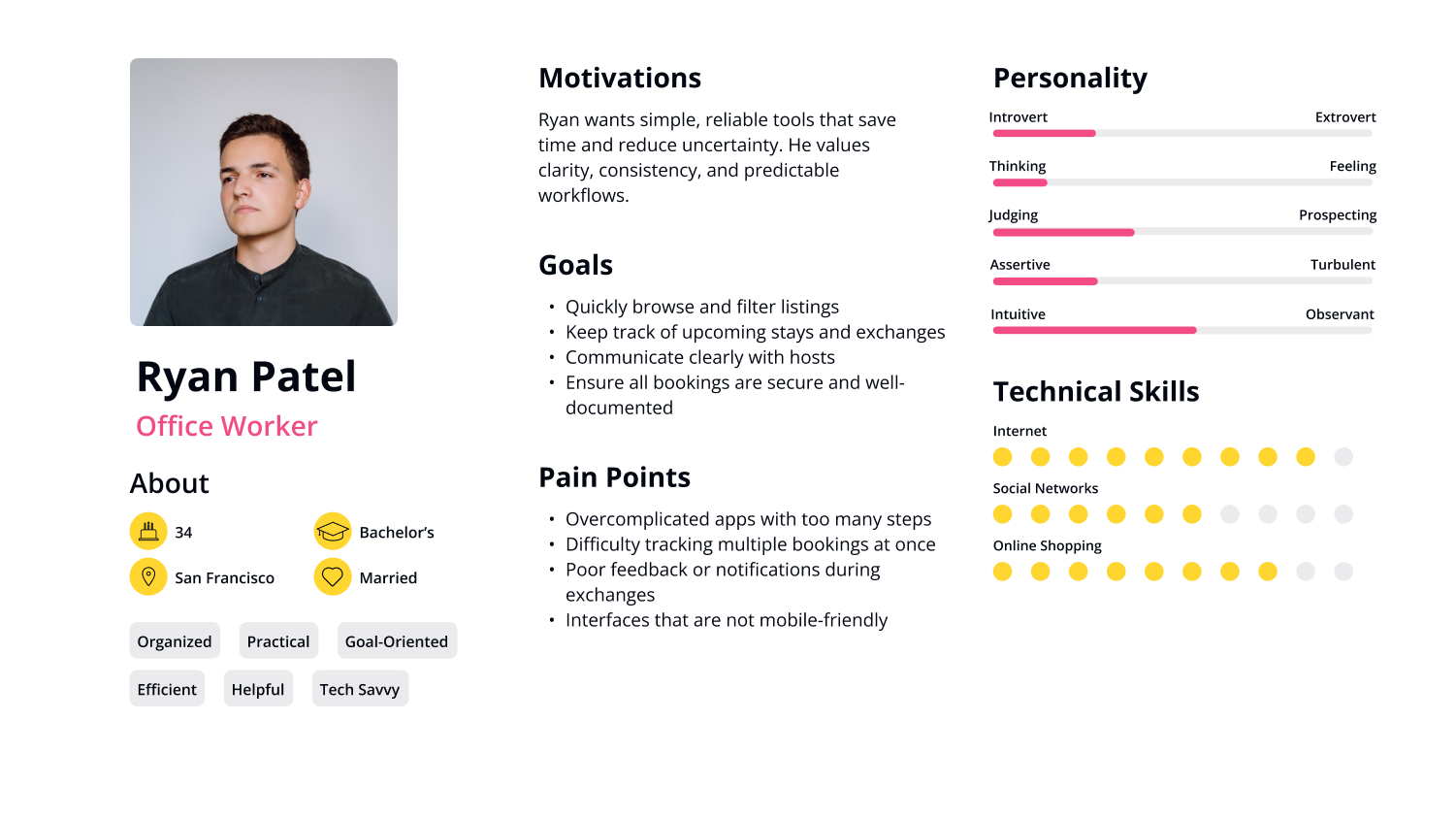
I built the design around Peter, a mobile-first family traveller frustrated by low-quality listings at unaffordable prices and by clunky desktop sites on mobile. As part of an active family of four with distinct needs — outdoor activities, cultural attractions, space — Peter and his partner Kate became the lens for every subsequent decision, from filtering logic to the "Places" travel guide. A customer journey
Design
A mood board and style guide set the visual direction. Research into current design trends and a visual audit pointed consistently toward neutral, muted palettes, generous white space, and rounded corners. I leaned into all three deliberately: the neutral palette and pastel hues create a calm, sophisticated feel that lets imagery lead; the white space keeps navigation effortless; and rounded corners draw attention to content over components, encourage friendly interaction, and save space. The goal throughout was a look refined enough to visibly outshine competitors.
User personas
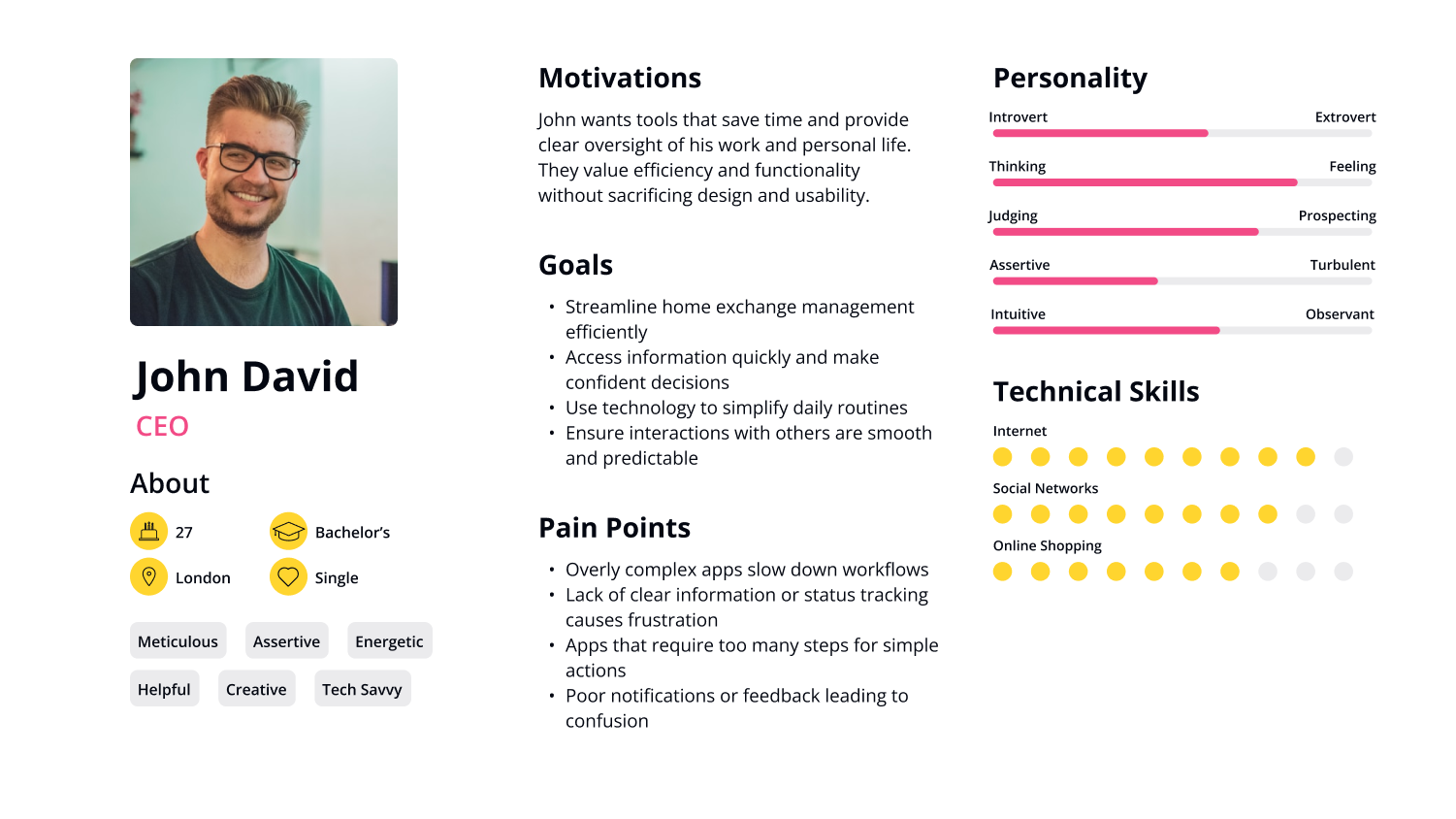
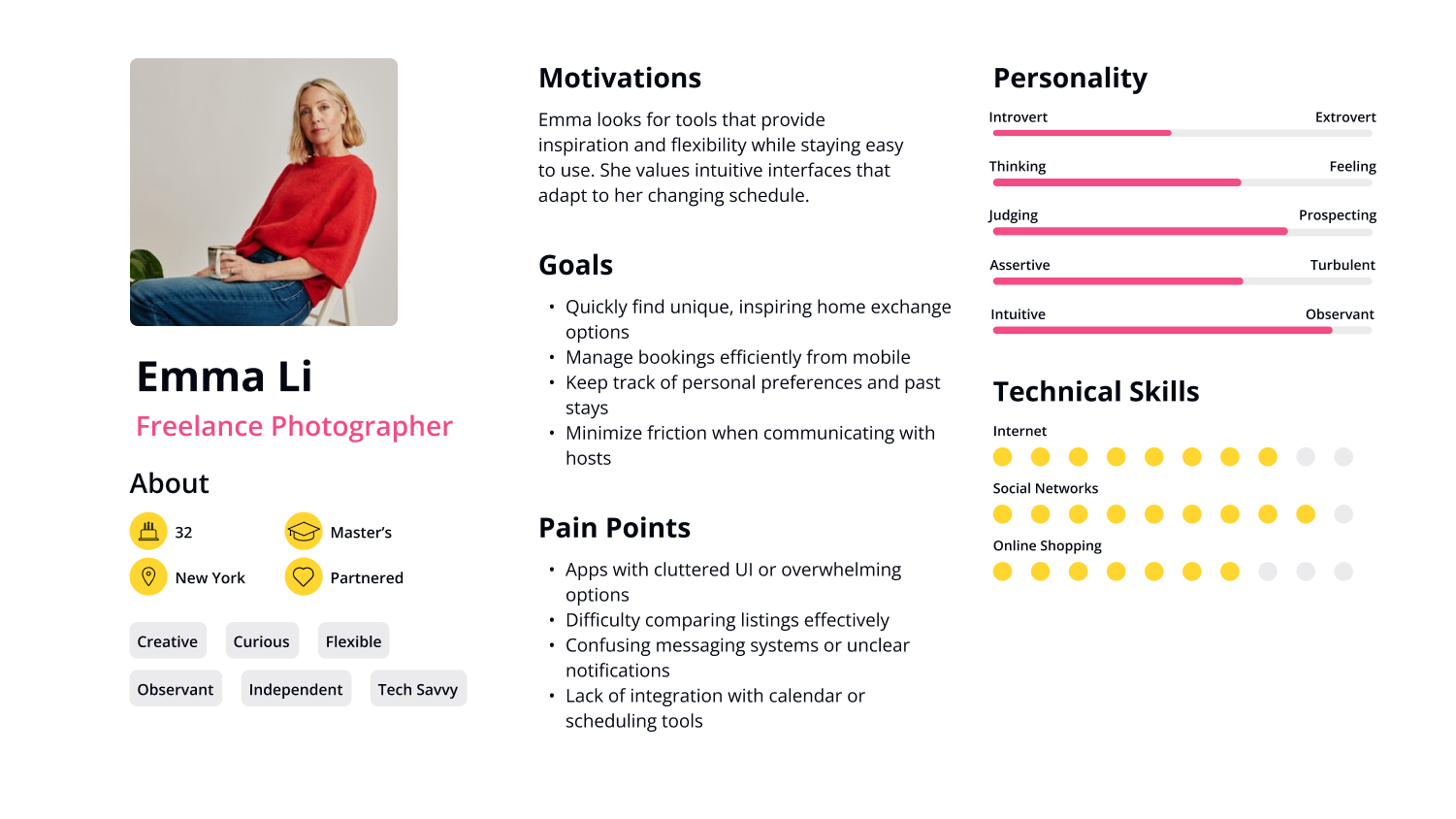
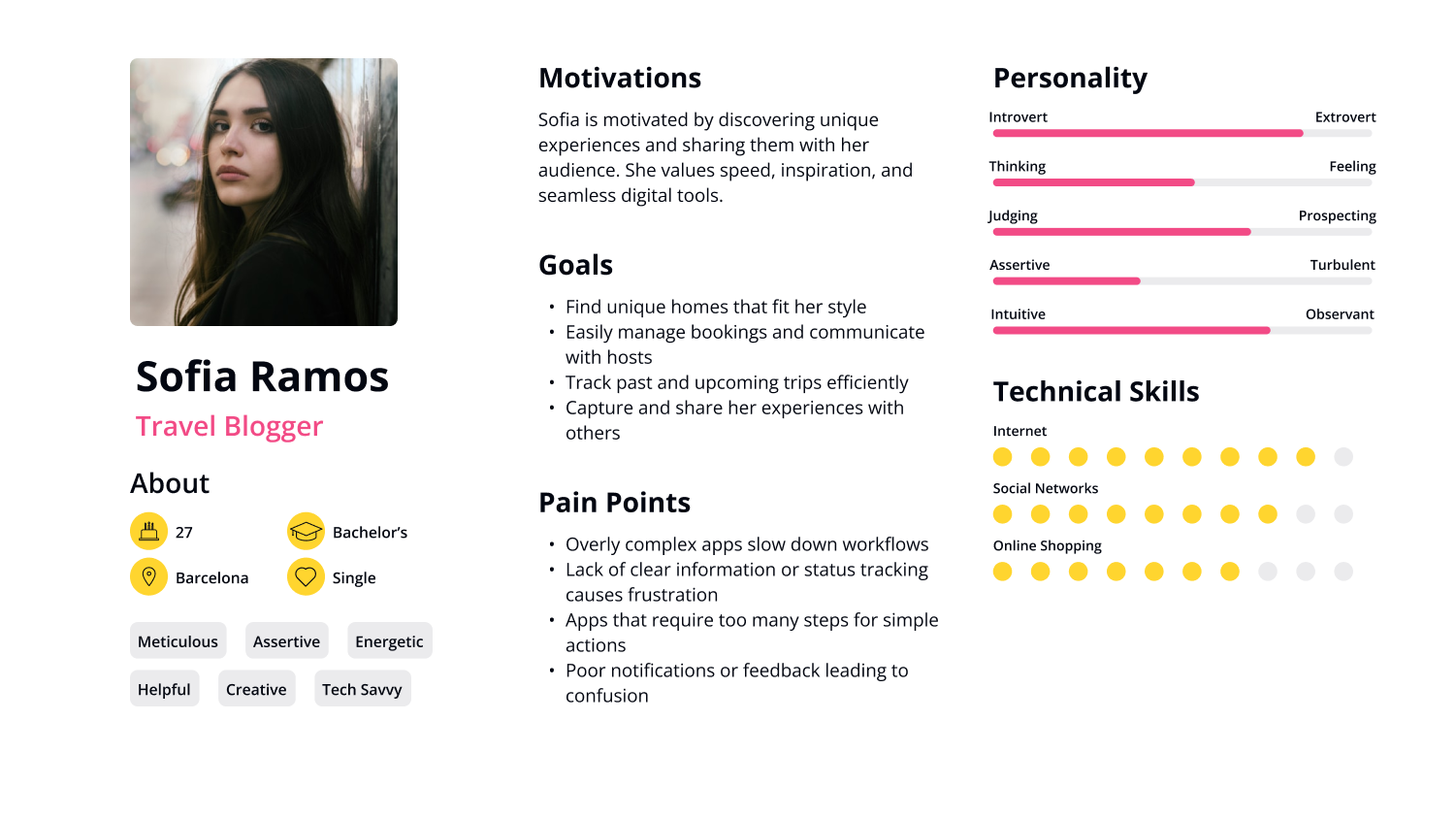
Love, Home, Swap connects like-minded travellers who want to swap homes — along with vehicles and amenities — for a set period, avoiding the cost of hotels or short-term rentals. The premise is simple: travel more, spend less, and experience a place like a local rather than a tourist.
The category, however, was crowded and undifferentiated. Around nine companies offered cost-free home exchange, and most looked and behaved almost identically — near-copies of one another and of Airbnb, with open listings, no exclusivity, and little to separate one service from the next. Critically, none of them had a mobile app.
That gap defined the opportunity. With most web browsing already happening on mobile, an app wouldn't just match competitors — it would let Love, Home, Swap own a channel none of them had entered, and deliver features that only make sense in someone's pocket: geolocation, offline maps, push notifications, and in-app messaging.
Connect users to the culture of a neighbourhood through a local's perspective — surfacing activities, attractions, and dining, not justaccommodation.
Design an intuitive, refined experience that feels more sophisticated than anything else in the category.
Deliver relevant, tailored content starting from a personalised onboarding flow.
Make quality listings easy to find and act on.
Give members a genuinely useful in-app communication channel.
Brainstorming
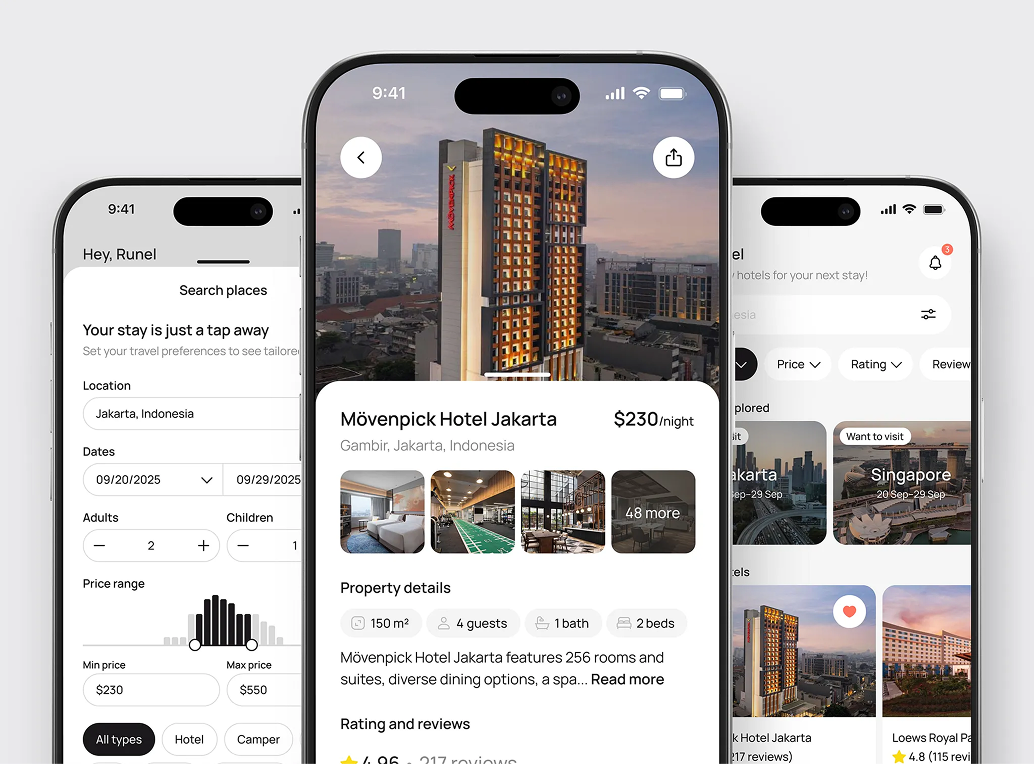
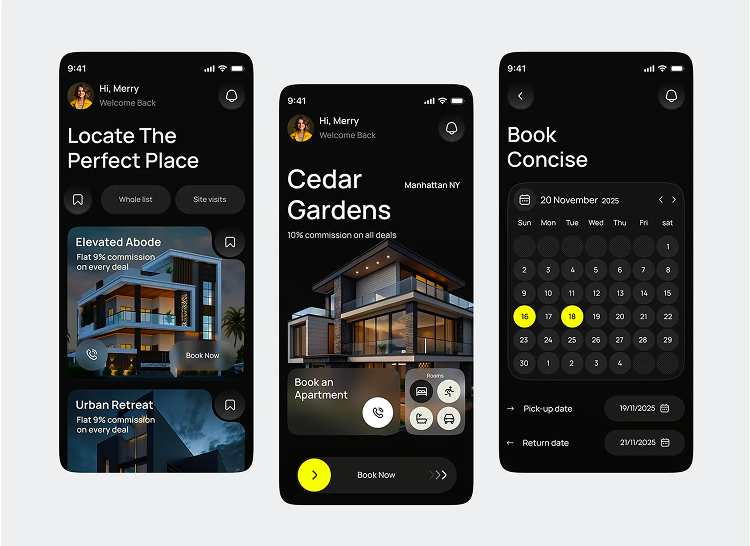
During brainstorming sessions, multiple ideas and feature concepts were explored to address user pain points and goals. This phase encouraged creative thinking, collaboration, and the rapid generation of potential solutions.
Sketches
Early sketches visualized key flows and interactions, helping to quickly test layout ideas and screen hierarchy. These low-fidelity representations allowed for rapid iteration before moving to wireframes and high-fidelity designs.
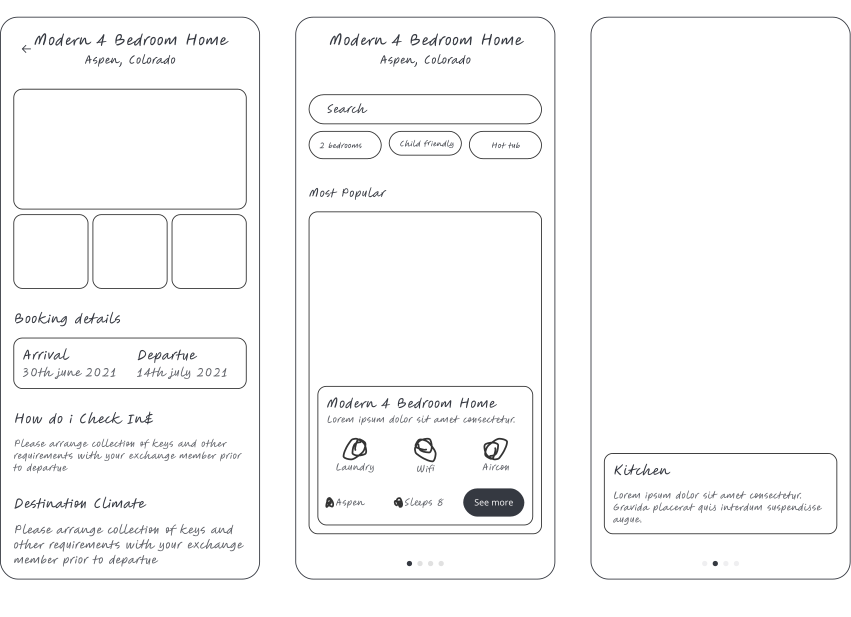
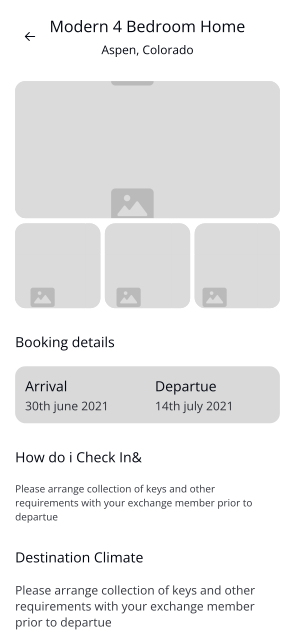
Wireframes
.svg)
.svg)
Deliverables
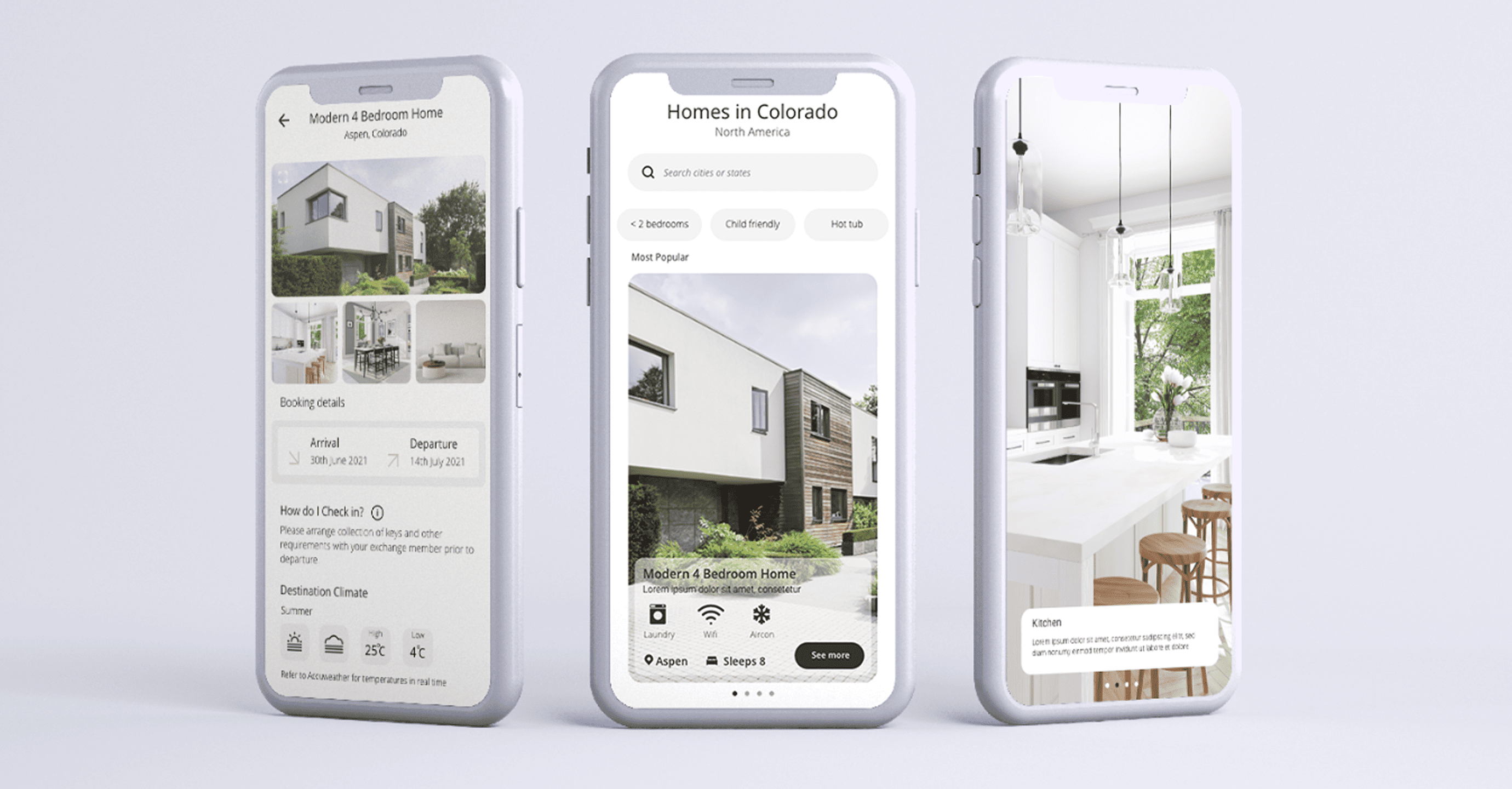
Followed end to end through Peter and Kate — browsing as guests, subscribing, listing their spacious countryside second home, and booking a family trip to Aspen — the design holds to its central promise: a tailored, local-first experience that treats accommodation, culture, activities, and logistics as one connected journey rather than separate problems. Every major decision traces back to a research insight or a stated goal, which is the bar I set for the concept rather than a claim of measured performance.
Designed to move the business toward three targets. Because this is a concept project, the following are the goals the design is builtto support — not results it has been shown to produce:
- Enter a channel no competitor occupies — positioning Love, Home, Swap as the only home-exchange service with a mobile app.
- Support retention through offline-capable, genuinely useful in-app features and feedback loops that double as social proof.
- Support engagement by timing prompts and features around peak booking periods.
The honest test of whether the design meets these goals is validation with real users, outlined below.
.svg)
“The project delivered a complete, hi-fidelity concept: a guest-to-member journey spanning three flows — familiarising with the app, creating a listing, and using the full member feature set — realised as an interactive prototype that demonstrates how screens and elements move together.”
Outcomes
The clearest gap in a concept project is the absence of real users, and I'd close it before making any performance claims. My plan would be moderated usability testing on the two highest-risk flows — onboarding and listing creation — where my assumptions about pacing, personalisation, and input friction most need evidence.
Specifically: task-completion testing on listing creation to see whether the staged, low-input approach actually reduces drop-off, and first-impression testing on onboarding to check that the tailored questions feel worth answering rather than like a barrier. Those findings would either confirm the design decisions above or send me back to revise them — which is the point of testing, and the honest way to turn this concept into a validated product.
Method
Placing it at the point of requesting an exchange — after value is felt — shaped the entire guest-to-member flow and was one of the more impactful choices in the project.
Findings
Translation, offline maps, and geolocation weren't decoration; they were the argument for the app existing at all. Leading with them clarified the whole product.
Iteration
Turning listing creation from a wall of form fields into buttons, toggles, and staged progress was the difference between a chore and something users would actually complete.
Designing
Holding the guest and member perspectives in parallel kept the experience coherent, but it also revealed how easily a feature-rich app can sprawl — a reminder to keep prioritising the core journey.
.png)
By focusing on user needs and simplifying complex flows, the app turns home exchange into a seamless, confident experience.
That Brings Ideas to Life
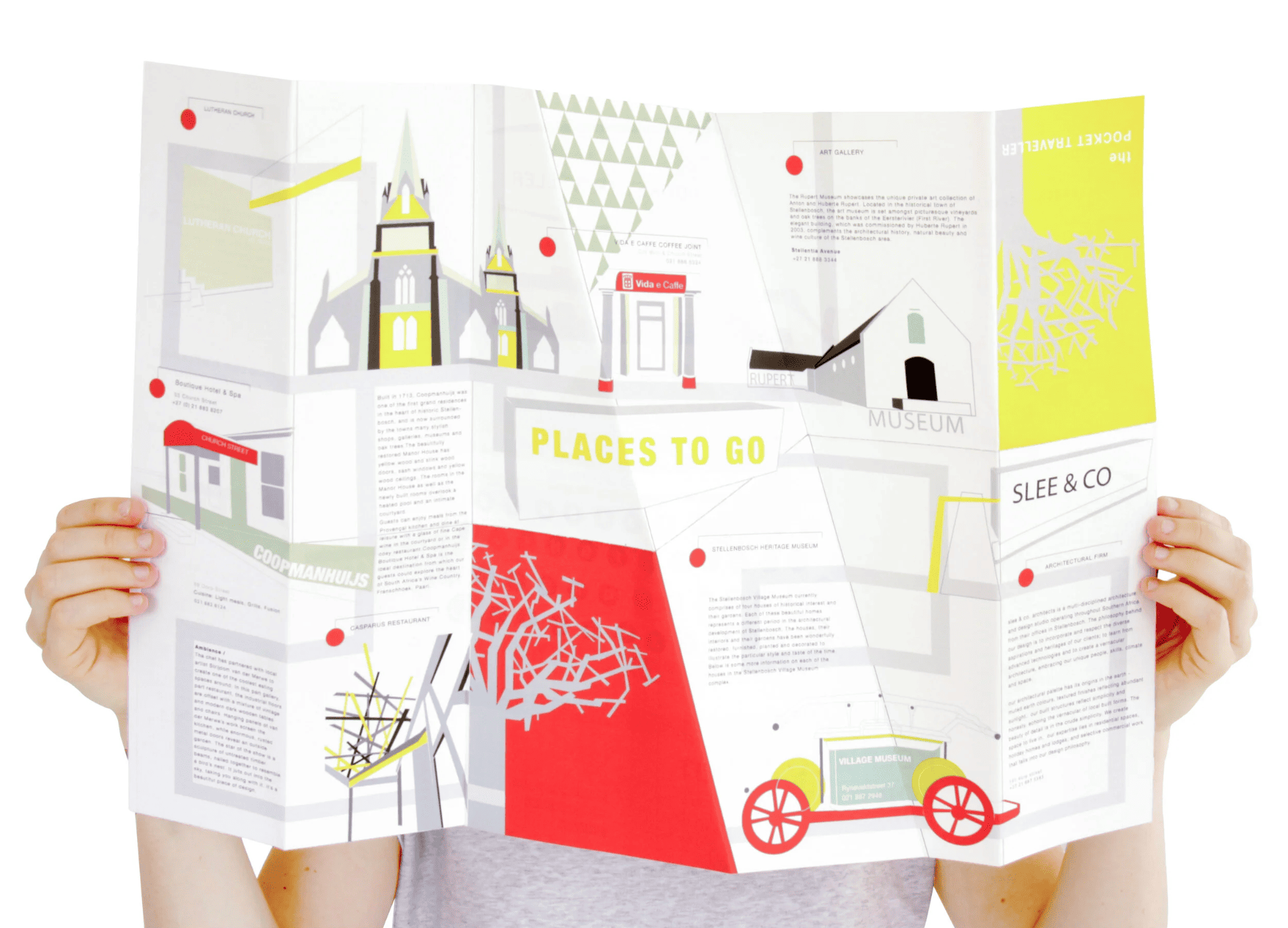
Print media Moby Dick
Infographics I love my city
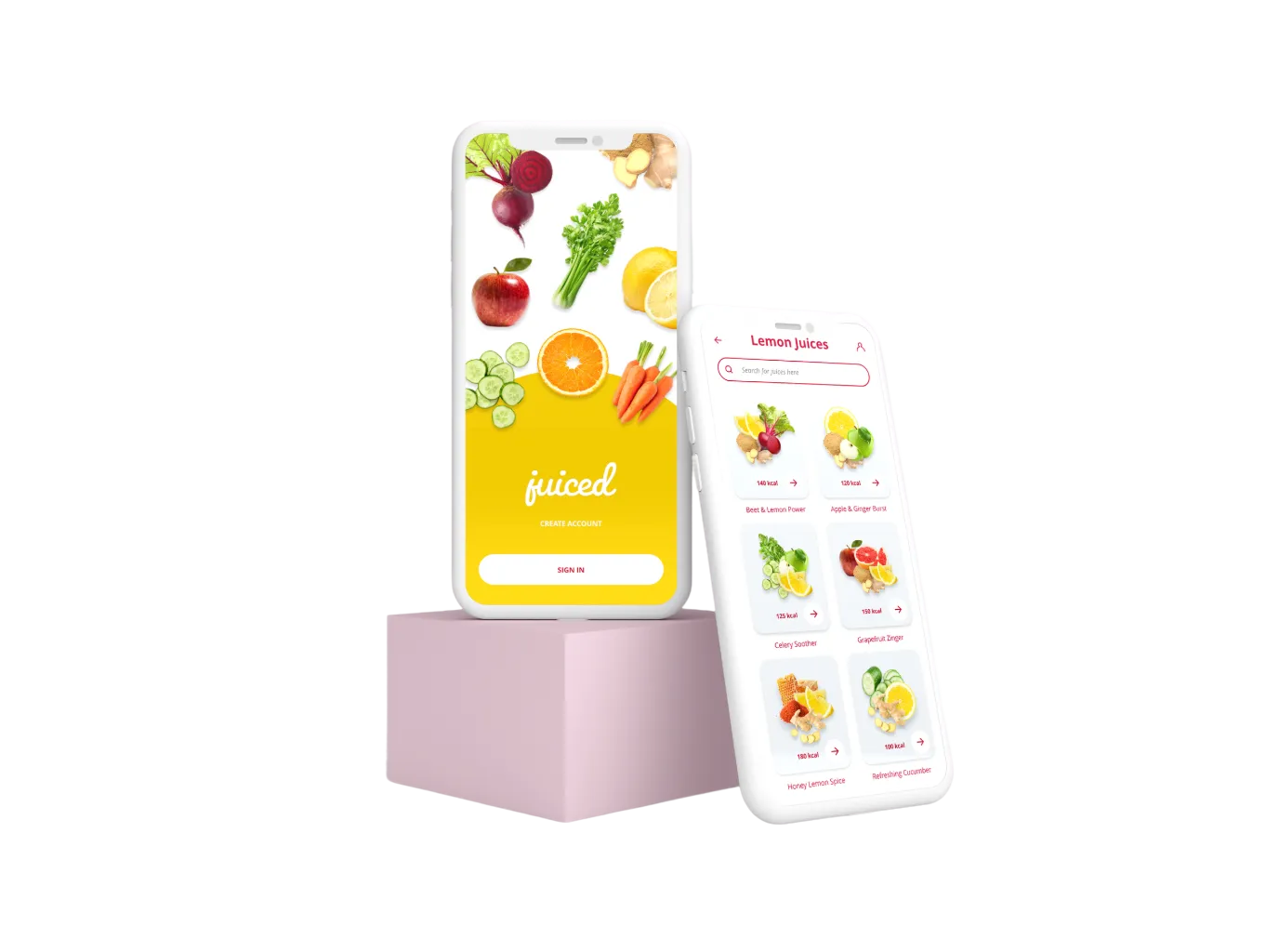
Juiced
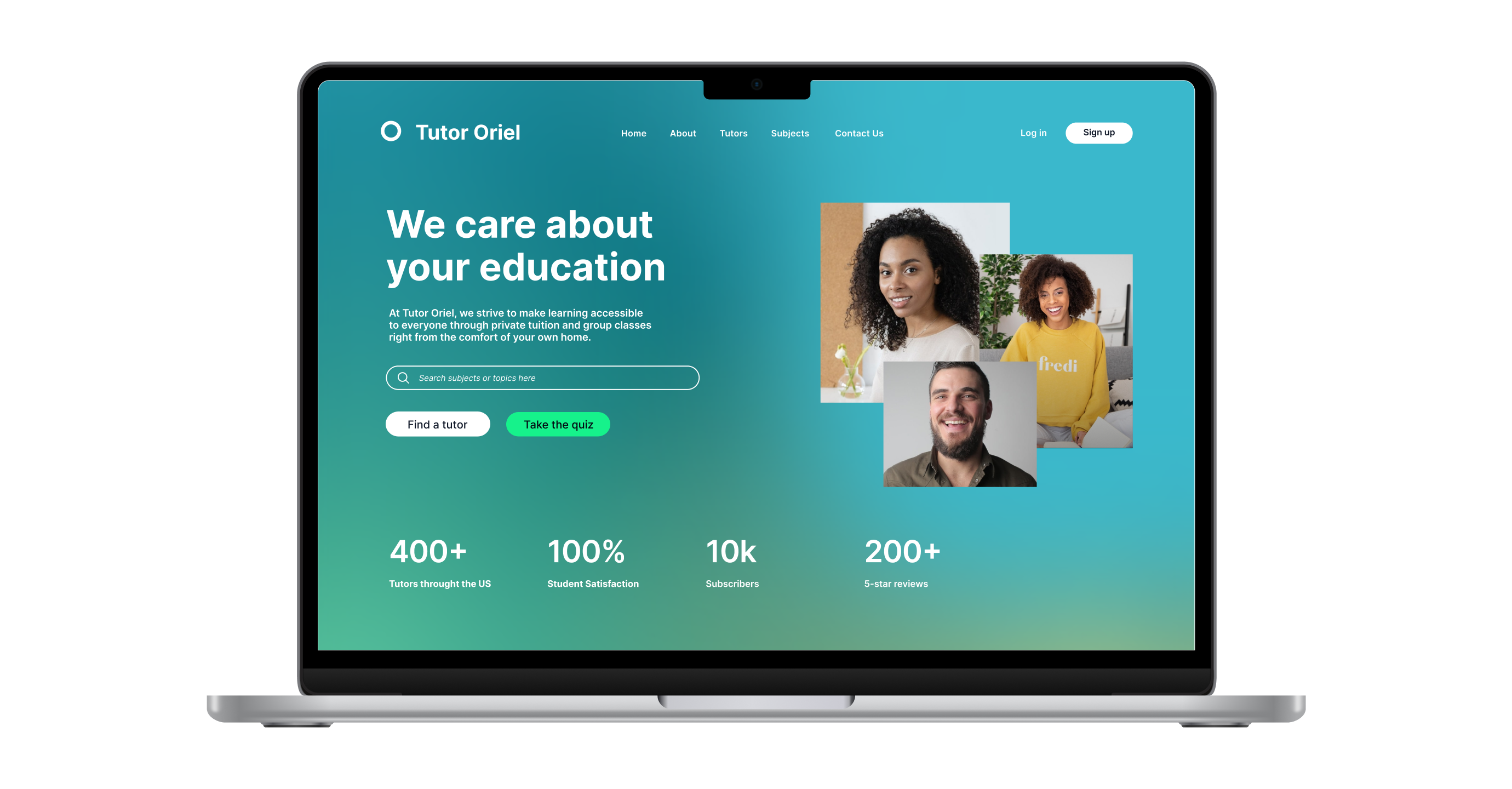
Project one
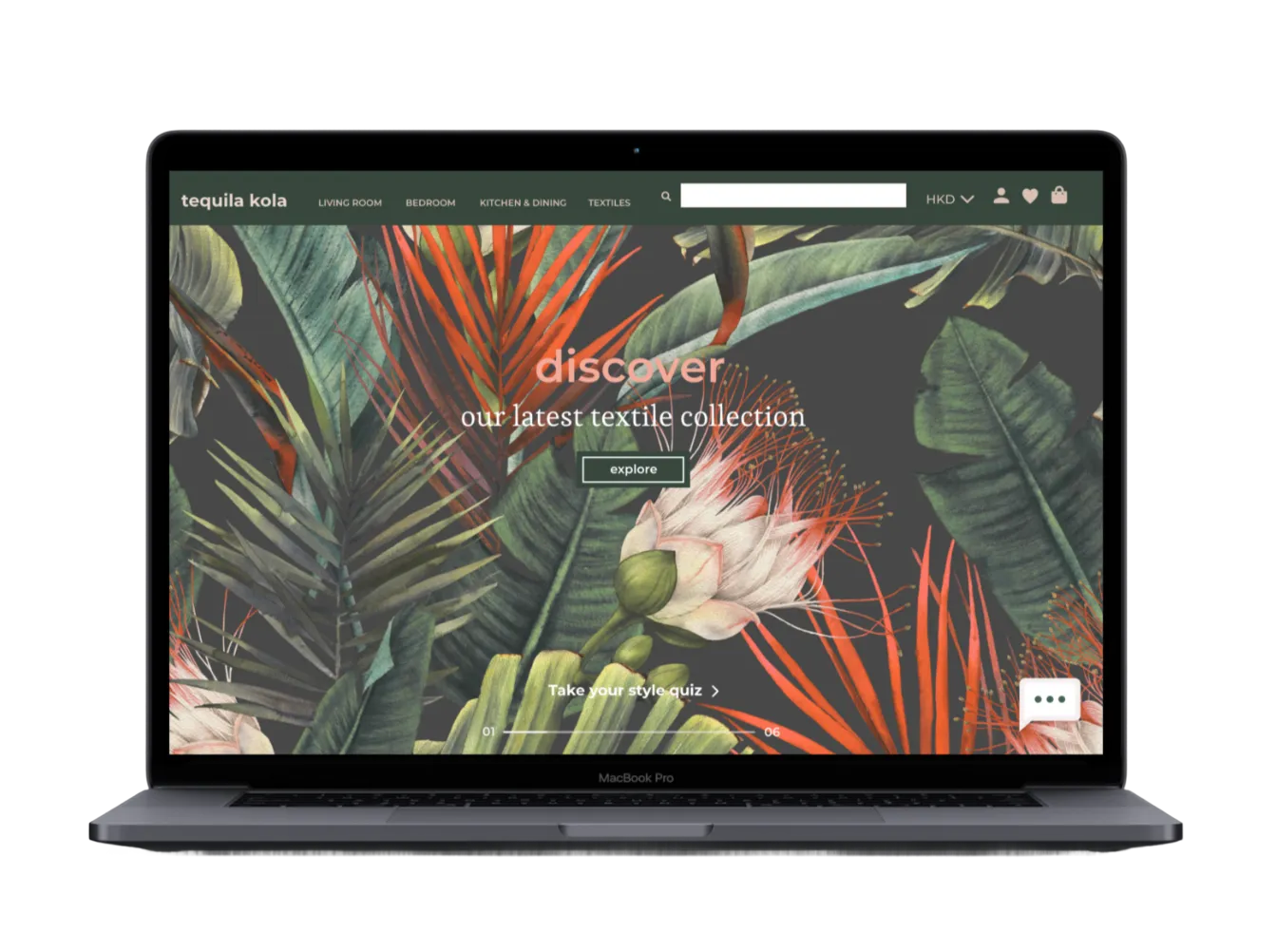
Ecommerce website
Juvage
UX/UI Mobile Design
.png)

.png)